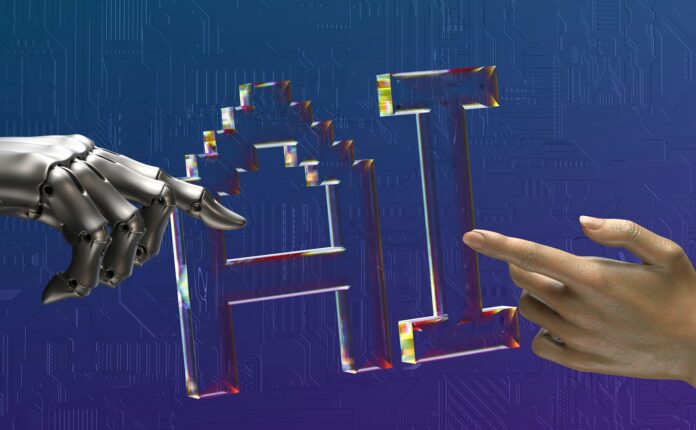
AI is moving faster than most of us can process. One day, you’re experimenting with ChatGPT to summarize meeting notes; the next, you’re hearing that AI can generate full marketing campaigns or analyze legal documents in seconds.
The shift feels both exciting and unsettling, like the ground beneath your career just tilted a few degrees. And you’re left wondering, “What’s left for me to do?”
In fact, a recent LinkedIn Future of Work Report found that the fastest-growing skills globally are those uniquely human: communication, critical thinking, and leadership. Because while AI can predict, synthesize, and automate, it still can’t empathize, contextualize, or connect.
The future of work isn’t about competing with AI. It’s about complementing it with human skills that make you irreplaceable.
1. Emotional Intelligence: The Essential Human Skill
AI might be able to analyze emotions, but it can’t feel them. It doesn’t know the tension in a meeting, the subtext in a client’s tone, or the subtle shift in energy when a team loses motivation. That’s where emotional intelligence (EQ) comes in.
EQ allows you to read the room, respond with empathy, and lead with awareness. These are the skills that build trust, which drives influence.
A Harvard Business Review study found that leaders with high emotional intelligence outperform their peers by nearly 20% in overall effectiveness. Why? Because they don’t just manage people; they move them.
How to double down on EQ:
- Practice active empathy; pause to understand before responding.
- Ask reflective questions: “How are you feeling about this direction?” not just “Does this make sense?”
- Learn to recognize your own emotional triggers so you can respond thoughtfully, not react impulsively.
AI may write the perfect script, but EQ ensures you deliver it with impact.
Want to learn how to apply these skills? The AI Oversight Framework mini course helps you review AI-generated content quickly as the “human in the loop.” Use promo code WELCOME15 to get 15% off.
2. Critical Thinking: Turning Information into Insight
We’re drowning in data but starving for discernment.
AI can surface trends and generate options, but it can’t decide what matters most in your specific context. That’s critical thinking: the ability to question assumptions, evaluate sources, and connect the dots others miss.
Think of it this way. AI is a powerful assistant. But without human judgment, it’s just noise in high definition.
The World Economic Forum consistently lists critical thinking and problem-solving as the top skills employers value most in the AI era. The ability to interpret complexity, not just automate it, is what keeps humans in the loop.
Try this:
- Challenge the default; ask why before how.
- When AI gives you an answer, analyze its reasoning: What’s missing? What bias could be at play?
- Cross-pollinate your thinking. Read outside your industry. Exposure to new ideas sharpens pattern recognition.
Remember, it’s not about knowing everything. It’s about asking better questions than the algorithm.
3. Creativity: The Original Disruptor
Here’s the irony: AI can generate art, music, and even poetry, but only by remixing what already exists. It can’t imagine something new. True creativity—the ability to generate novel ideas, reframe problems, and make intuitive leaps—remains one of our greatest differentiators.
In one Adobe study, 82% of leaders agreed that creativity drives business results, yet many professionals still underestimate it as a “soft skill.” It’s not. Creativity fuels innovation, adaptability, and problem-solving, which are the very things automation can’t replicate.
Here’s how to amp up this skill:
- Make space for curiosity breaks: explore a new topic, hobby, or tool.
- Combine unlikely ideas; innovation often happens at intersections.
- Use AI as a creative partner, not a crutch. Let it accelerate the process, not replace the spark.
Creativity isn’t just artistry. It’s audacity and the willingness to imagine what doesn’t yet exist.
4. Communication: The Skill That Scales Every Other Skill
No matter how powerful your ideas are, they mean little if you can’t communicate them clearly.
AI can draft an email, but it doesn’t understand tone, timing, or nuance. It doesn’t know how to persuade a skeptical stakeholder or build consensus across competing priorities.
In every career stage, communication multiplies your influence. It helps you translate strategy into action, feedback into growth, and vision into momentum.
Consider the following:
- Simplify your message; clarity builds confidence.
- Match your medium to your message (some things need a conversation, not a Slack/Teams thread).
- Master strategic listening: notice what’s unsaid as much as what’s said.
Communication is more than transmitting information. It’s how you build credibility, trust, and leadership presence.
5. Adaptability: Your Most Future-Proof Trait
AI will keep evolving. So will the workplace. The professionals who thrive aren’t the ones who resist change; they’re the ones who reframe it.
Adaptability is the ability to pivot without losing your core sense of purpose. It’s how you stay open, curious, and resilient when the future feels uncertain.
A McKinsey report found that adaptability is now one of the most sought-after traits in hiring, because it signals learning agility or your ability to grow faster than the change around you.
How to double down on adaptability:
- Treat change as feedback, not failure.
- Build “career elasticity”: invest in learning that expands your options, not just your current role.
- Reflect regularly on what’s shifting, and what you want to keep constant.
Adaptability doesn’t mean abandoning stability. It means evolving with intention.
The Real Competitive Edge: Being Human on Purpose
The next era of work isn’t about coding, prompts, or productivity hacks. It’s about becoming a more insightful, empathetic, creative version of yourself—and using AI to amplify that, not erase it.
So as you look at your own career, ask yourself:
- What human strengths do I bring to my work that no tool can replicate?
- How can I develop those skills so they become my signature advantage?
Because in a world that’s increasingly automated, authenticity and human connection aren’t liabilities. They’re your leadership superpowers.
Here’s an exercise for this week. Choose one human skill—emotional intelligence, critical thinking, creativity, communication, or adaptability—and practice it deliberately.
Notice the difference in how people respond. Notice how you feel more in control.
The future of work belongs to those who can partner with technology without losing their humanity. Make sure you’re one of them.