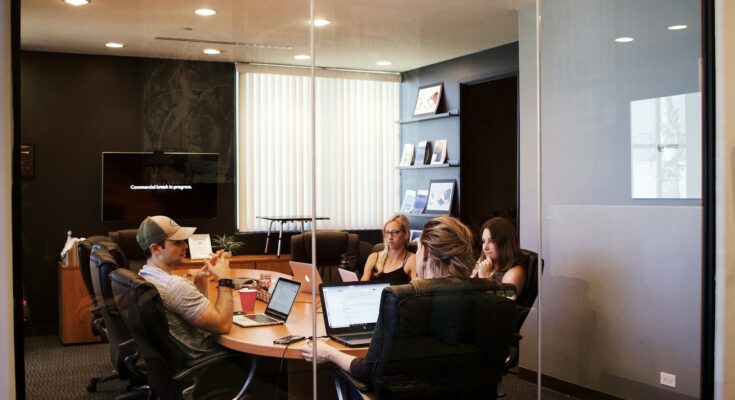
It’s 9:02 a.m., and the meeting has already started. Half the team is in the room, half are tiny boxes on screen. Someone’s talking over the speaker; someone else is muted but doesn’t know it. Meanwhile, you—sitting at home—are trying to jump in with a point you know could move the project forward, but no one seems to hear you.
When hybrid work first became the norm, it was sold as freedom: flexibility, focus, balance. But for many professionals, it’s also meant invisibility. The workplace used to be a stage—you could read the room, build rapport, and seize moments to shine. Now, the room is split between pixels and people, and those moments are harder to find.
So, how do you stay visible and valued in a mixed work world without resorting to performative self-promotion?
Let’s talk strategy.
Visibility is About Value Not Volume
The loudest person on Zoom isn’t necessarily the most influential one. What matters is consistency of contribution. That means being the person others trust to bring clarity, insight, or momentum when things are murky.
Start by asking yourself:
- What am I known for in this team?
- Do my colleagues see me as dependable, strategic, or innovative—or just responsive?
- When my name comes up, what problem or skill do people associate me with?
If you’re not sure, that’s a clue to start shaping the narrative yourself. Visibility in a hybrid world isn’t about showing up more often. Instead, it’s about showing up intentionally.
How to do that:
- Anchor your expertise. Identify one or two areas where you consistently add value. Then find ways to reinforce it in updates, recaps, or project insights.
- Summarize to lead. After hybrid meetings, send a concise follow-up note summarizing key actions or decisions. It shows initiative and keeps your name attached to progress.
- Use visibility loops. Share progress on projects in shared channels or dashboards, not just emails. When people see your fingerprints on outcomes, credibility compounds.
Outsmart Proximity Bias
A recent study by the Society for Human Resource Management found that 67% of managers admit they give in-person employees more visibility and advancement opportunities than remote ones. That’s human nature. We trust what (and who) we see.
But here’s the reframe: proximity isn’t just about geography—it’s about mental real estate. Your goal is to occupy space in people’s minds, not just in the office.
Build “mental proximity” by:
- Keeping leaders looped in. Don’t wait for check-ins. Send occasional short updates highlighting impact (“Here’s what I learned from X” or “This approach helped us resolve Y”).
- Using visual cues. Keep your camera on when you can, but also engage. Ask thoughtful questions, comment in chat, connect ideas between people. Presence is active, not just visible.
- Bridging worlds. If you’re remote, be the connector. Help sync what’s happening online and offline. People remember those who keep communication flowing.
Think of it as relational architecture: you’re building bridges that make your presence felt, even when you’re not physically there.
Want to diagnose your visibility status? Download our free Career Visibility Checklist to get started.
Hybrid Leaders Know How to “Show Up” in Every Mode
Even if you’re not a manager, you can lead in hybrid work settings. Leadership in today’s context is less about title, more about energy management. It’s how you make others feel seen, aligned, and motivated, regardless of medium.
Ask yourself: How do I make virtual spaces feel as meaningful as physical ones?
Try these:
- Open meetings with intention. A simple “Before we dive in, I’d love to hear quick wins from the week” changes the tone.
- Translate body language into digital cues. Use reactions, emojis, or the chat to acknowledge others. This signals that say “I’m listening” go a long way.
- Be consistent across modes. Whether you’re in the room or remote, your tone, engagement, and reliability should match. Consistency builds trust.
Hybrid leaders synchronize, making both spaces work better because they know how to translate presence into impact.
Relationships Still Rule in Hybrid Work
Here’s what hasn’t changed: careers move at the speed of relationships. What has changed is how those relationships form and deepen.
In a hybrid world, relationship capital is built through micro-moments. Consider sending a quick message of appreciation, a “thinking of you” chat, or a follow-up after someone’s presentation.
Instead of waiting for hallway chats that may never happen, design your own “digital hallways”:
- Comment on internal posts or wins.
- Share relevant articles or insights in team channels.
- Schedule short virtual coffees to connect in a meaningful way.
These aren’t small gestures. They’re signals of care and engagement that compound over time into trust.
Redefine What “Showing Up” Means in Hybrid Work
Hybrid doesn’t mean half-in. It means redefining presence: not where you sit, but how you show up.
To stay top-of-mind:
- Be seen for your thinking, not your attendance.
- Make contributions visible, even asynchronously.
- Invest in relationships that extend beyond the screen.
- Balance visibility with value. Let your work speak, but make sure it’s heard.
When you consistently bring clarity, connection, and care to your hybrid presence, people notice. Opportunities have a way of finding those who make impact easy to see.
The Takeaway for Hybrid Work Dynamics
In a mixed work world, presence is about perception. You can’t control proximity bias, office politics, or who gets the loudest mic on Zoom. But you can control how you show up, how you communicate value, and how intentionally you build connection.
So ask yourself: What do I want to be known for today, this quarter, this year?
Then start aligning your actions, one micro-interaction at a time.
Hybrid isn’t the end of visibility. It’s the evolution of it.